
Lessons from Vashti, Ahasuerus, Herod, Esther, and Other Leaders
By Queen Olashore
Heartbeat of God Publications
Leadership is often admired from a distance but misunderstood up close. Behind every throne are decisions, relationships, pressures, and voices competing for influence. The stories of Queen Vashti, King Ahasuerus, Herod Antipas, Esther, and other biblical leaders reveal timeless truths about authority, wisdom, and character.
The account of Queen Vashti in the Book of Esther remains one of Scripture’s most debated leadership narratives. Some view her refusal to appear before King Ahasuerus as a courageous stand for dignity and self-worth. Others see it as a failure to discern the responsibilities and expectations attached to her office. Whatever position one adopts, the story reminds us that leadership decisions carry consequences beyond the moment in which they are made.
King Ahasuerus, on the other hand, demonstrates another leadership challenge. Though he possessed immense power, he allowed advisers to shape his response. Rather than seeking understanding, he acted on counsel fueled by fear and political preservation. His story reminds us that authority does not guarantee wisdom.
A similar pattern appears in the life of Herod Antipas. He knew John the Baptist was a righteous man, yet he allowed public opinion, personal pride, and unhealthy influences to dictate his decision. A ruler with power became a prisoner of his own image. The result was one of the most tragic decisions recorded in Scripture.
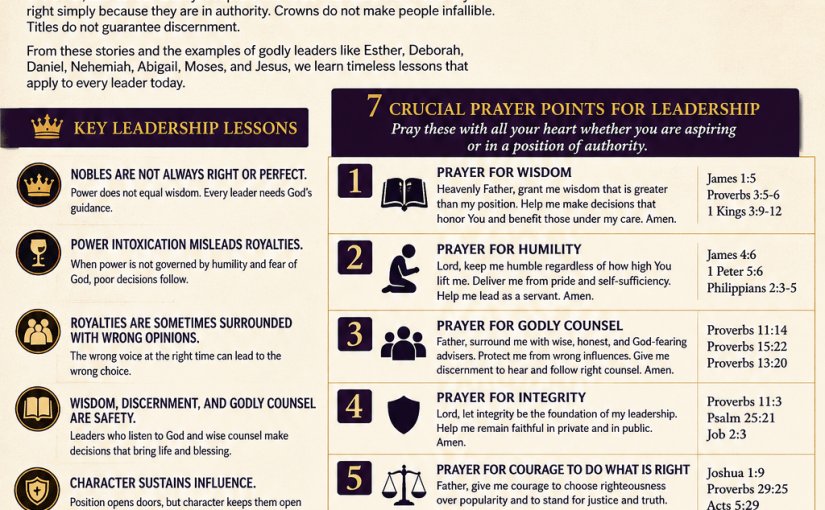
These accounts teach a profound lesson: leaders are not always right simply because they occupy positions of authority. Crowns do not make people infallible. Titles do not guarantee discernment. Wealth, influence, and status can never replace wisdom.
Perhaps one of the greatest dangers facing leaders is the intoxication of power. Power can create the illusion that one’s judgment is beyond question. It can silence correction and magnify pride. When leaders stop listening to truth, they often begin listening to voices that merely reinforce their desires.
Scripture repeatedly warns about the influence of counsel. King Rehoboam divided a kingdom because he rejected wise advice. King Ahab surrounded himself with voices that told him what he wanted to hear. In contrast, godly leaders understood the value of wisdom and accountability.
Esther stands as a shining example. She possessed beauty, influence, and favor, yet she combined these gifts with patience, humility, and discernment. She knew when to speak, when to wait, and how to approach matters of significance. Her leadership saved a nation.
Deborah led with courage and spiritual insight. Abigail used wisdom to prevent disaster. Nehemiah refused distractions because he understood his assignment. Daniel maintained integrity in hostile environments. Moses remained humble despite carrying enormous responsibility. Above all, Jesus demonstrated that true leadership is not domination but service.
These examples reveal a leadership principle that applies to both men and women:
“Position opens doors, but character sustains influence”
Heartbeat of God Publications.

 HeartBeatofGod